Leather sofas are a popular choice in many homes due to their comfort, durability, and timeless appearance, but keeping them clean can be a concern for homeowners. Dust, body oils, food spills, and everyday use can slowly build up, often without being immediately noticeable. Many people worry that cleaning leather incorrectly could lead to cracking, fading, or permanent damage.
When leather sofas are not cleaned and maintained properly, dirt and oils can break down the material over time, shortening its lifespan and affecting its look. Using the wrong products or techniques may cause more harm than good, making the problem worse instead of better.
In this blog, we’ll explain how to clean my leather sofa without damaging it, covering safe cleaning methods, common mistakes to avoid, and maintenance tips to help you keep your leather sofa looking its best for years to come.
Why Leather Sofas Need Special Care?
Leather is a natural material derived from animal hide. Like our human skin, it needs regular hydration and protection to stay soft, smooth and strong. When leather is ignored or cleaned the wrong way, it can dry out, crack, or lose its natural shine over time.
While fabric sofas can be washed or steam-cleaned, leather demands gentler methods and dedicated cleaning solutions. Another reason leather requires unique care is its reaction to environmental factors.
Sunlight, changes in temperature, humidity, and harsh household cleaners can all affect its condition. Without the right care, a leather sofa can quickly lose its clean and stylish look.
How To Clean My Leather Sofa Without Damaging It? Step-by-Step Guide
Cleaning a leather sofa does not need to feel risky or confusing. When done correctly, regular care helps maintain its appearance and prevents long-term damage. Here is a simple step-by-step guide to help you care for your leather sofa safely.
1. Dust and Vacuum Regularly
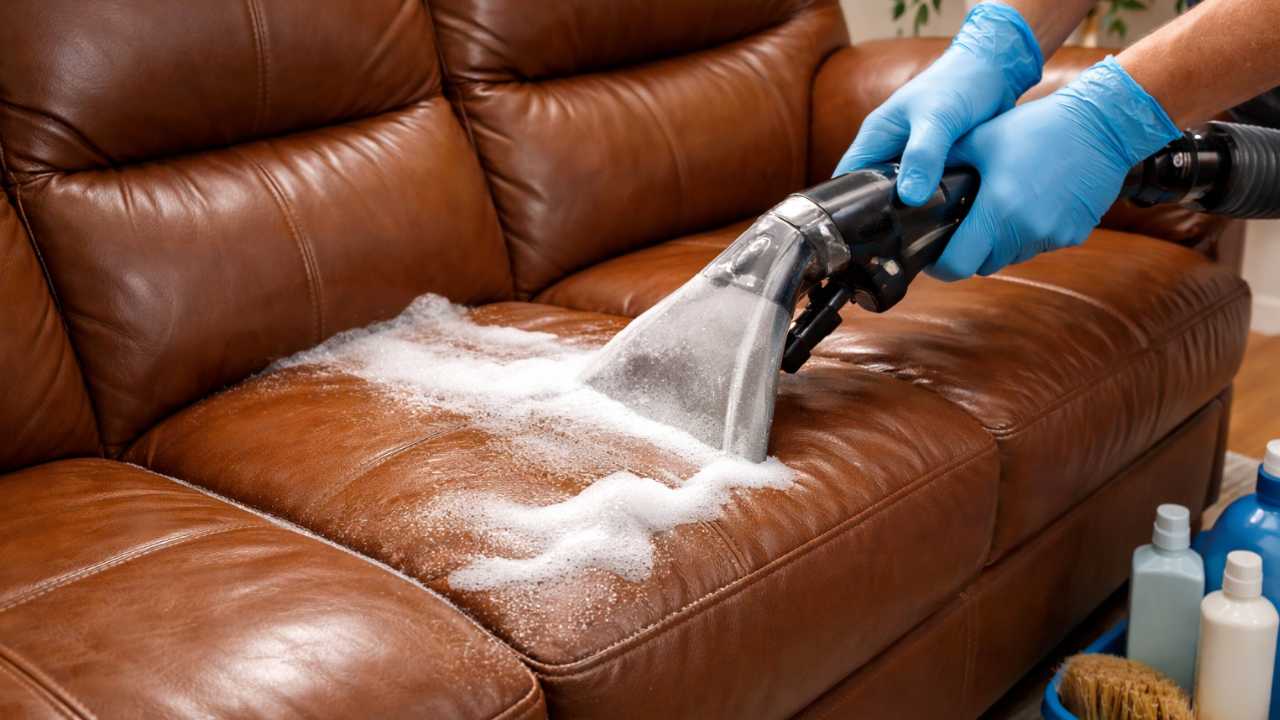
Leather does not trap dust as easily as fabric, but dirt and small particles still settle on the surface and inside seams. Use a microfiber cloth weekly to wipe the sofa and vacuum gently with a soft brush attachment to remove debris without scratching the leather.
2. Wipe with a Damp Cloth
For routine cleaning, lightly dampen a clean, soft cloth with distilled water and gently wipe the leather surface. Never soak the leather, as excess moisture can weaken it. Distilled water is recommended because it prevents mineral residue that can leave marks on leather.
3. Use a Leather Cleaner
Every few months, clean your sofa using a pH-balanced leather cleaner designed for furniture. Apply it with a soft cloth using gentle circular motions to lift dirt safely. Avoid harsh detergents or multi-purpose cleaners, as they can strip natural oils from the leather.
4. Condition the Leather
Conditioning is essential to keep leather soft and prevent cracking or fading. Apply a high-quality leather conditioner every six to twelve months to restore moisture lost through daily use. Proper conditioning helps maintain flexibility, colour, and overall strength of the leather.
5. Spot Clean Stains Immediately
Spills should be dealt with as soon as they happen to avoid permanent stains. Blot grease with a dry cloth without rubbing. For food or drink spills, absorb liquid quickly and wipe gently with a damp cloth before the leather absorbs the stain.
6. Avoid Sunlight and Heat Exposure
Leather is highly sensitive to sunlight and heat, which can cause drying, fading, and cracking. Position your sofa away from direct sunlight, radiators, and heaters. Using blinds or curtains helps reduce sun exposure and keeps the leather in better condition.
7. Schedule Professional Cleaning
Even with regular home care, professional leather cleaning once a year is highly recommended. Trained professionals use specialist products and techniques to remove deep dirt, refresh the leather, and extend the lifespan of your sofa without risking damage.
5 Common Mistakes People Make When Cleaning Leather Sofas
Many leather sofa problems are caused not by lack of cleaning, but by cleaning the wrong way. Small habits and common shortcuts can slowly damage the leather and reduce its lifespan. Understanding these mistakes helps you avoid unnecessary wear and keep your sofa in good condition.
1. Using household cleaners
Household cleaners like bleach, ammonia, or multi-surface sprays are far too harsh for leather. These products strip away natural oils, leaving the leather dry, dull, and more likely to crack over time. Even small amounts can cause permanent damage.
2. Soaking with water
Using too much water is one of the quickest ways to damage leather. Excess moisture weakens the leather fibres and can lead to swelling, stains, or mildew. Leather should only be wiped with a lightly damp cloth, never soaked or saturated.
3. Scrubbing aggressively
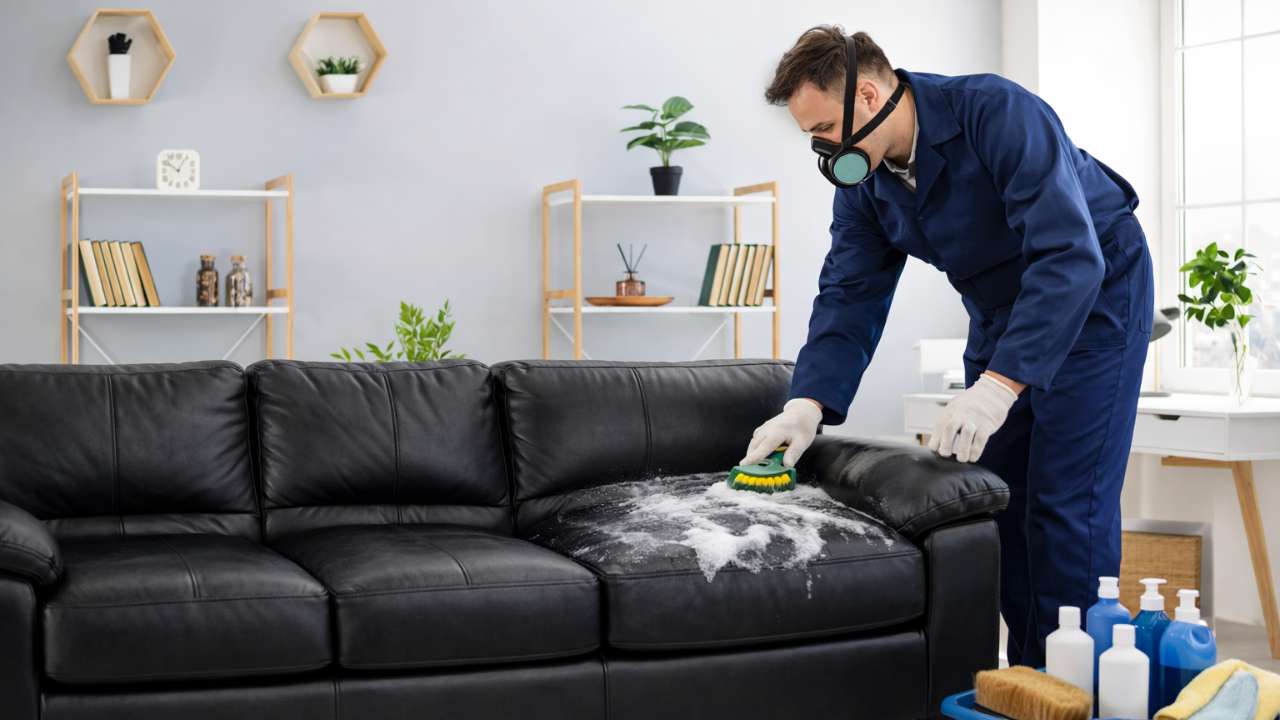
Scrubbing leather with force can scratch the surface and wear away its protective finish. This often leads to fading and rough patches. Leather responds best to gentle wiping and light circular motions rather than hard rubbing.
4. Neglecting conditioner
Skipping conditioning allows leather to dry out and lose its natural flexibility. Without regular conditioning, leather becomes stiff and more prone to cracking. Conditioning helps maintain softness, strength, and a healthy appearance over time.
5. Ignoring spills
Spills left untreated can quickly soak into leather and become permanent stains. Leather absorbs liquids faster than many people realise. Blotting spills immediately helps prevent discolouration and keeps the leather looking clean and well cared for.
Maintenance Tips to Extend the Lifespan of Your Leather Sofa
Cleaning alone is not enough to keep a leather sofa in excellent condition for years. Long-term care depends on small, consistent habits that protect the leather from daily wear and environmental damage.
- Rotate seat cushions regularly to distribute weight evenly and prevent uneven wear.
- Use throws or covers on armrests and seating areas to reduce friction in high-use spots.
- Keep pets’ claws trimmed to minimise the risk of scratches and surface damage.
- Maintain indoor humidity levels between 40–55% to prevent the leather from drying or cracking.
- Dust wooden or metal sofa frames to keep the entire sofa looking clean and well maintained.
- Avoid eating on the sofa to reduce the chances of spills and stubborn stains forming.
Conclusion
Leather sofa care plays an important role in maintaining the comfort, appearance, and lifespan of your furniture, yet many homeowners only think about cleaning when stains or wear become noticeable. From understanding why leather needs special care to using safe cleaning methods, avoiding common mistakes, and following simple maintenance habits, each step helps protect your sofa from damage while keeping your sofa looking its best.
Our experienced team provides safe leather sofa cleaning services using the right products and techniques to protect your furniture. Contact Perfect Clean today to book a service and keep your leather sofa in excellent condition for years to come.